Democracy Lives on your Street
Yesterday, thousands of mayors, city councilors, school board members, and town meeting reps were elected across the country. Most of them won’t make national news, but they’ll make the decisions that shape your life every day. They decide how safe your streets feel, how your kids get to school, which neighborhoods get investment, and how your community plans for the future.
Local elections rarely grab attention, but local governments are where democracy is most tangible and most personal. The people elected yesterday will soon be making choices about zoning, transportation, climate adaptation, and budgets that directly affect your daily routines, your paycheck, and your sense of belonging in your community. That’s because a single vote carries more power in small-scale elections. In many cities, a few dozen ballots can decide who represents an entire neighborhood or who controls decisions about housing, schools, or safety.
Local governments determine whose street gets fixed first and whose waits another winter. It sets the zoning that decides whether an affordable housing project can move forward or whether short-term rentals take over a neighborhood. It manages the elections office that determines how easy it is to cast a ballot. It negotiates contracts for police, teachers, and public workers, setting the tone for everything from classroom sizes to community trust. And it decides how billions in federal and state dollars, from ARPA funds to infrastructure grants, actually get spent on the ground.
This year alone, more than 63,000 candidates ran for more than 30,000 local seats on the ballot, representing millions of people nationwide. Each one of those races carries decisions about housing, safety, schools, and climate resilience that will ripple for years to come.
Part of the challenge is access. Information about local candidates isn’t nearly as easy to find as information about national ones. With local news outlets shrinking or shuttering, fewer reporters are documenting who’s running, what they stand for, or even when elections take place.
Despite the enormous influence local governments wield, most of their elections unfold quietly. They rarely draw headlines, the candidates don’t have national platforms, and the races themselves are often nonpartisan—meaning there’s no party cue on the ballot to guide voters who don’t recognize the names. Many people never even realize an election is happening until the signs come down.
That invisibility shows up at the polls: in most local contests, fewer than one in five eligible voters participate. Yet these same governments collectively control roughly a third of all public spending in the United States—and handle the services people interact with most directly. They run the schools, maintain the roads, manage public safety, regulate housing, and set the priorities that shape the feel and fairness of our daily lives.
It’s a paradox of American democracy: the level of government that most affects us is the one we tend to ignore.
When local leaders are effective, the results reach far beyond potholes and policy memos. Strong, engaged leadership at the local level can rebuild trust, improve daily services, and strengthen democracy from the ground up. It’s in town halls and city councils where our government still feels personal where a conversation, a single meeting, or one determined voice can shift how a community plans for its future.
In ActiVote’s work with small cities and towns, we’ve seen how one engaged councilor can open the door to new ways of thinking about housing, or how a group of residents can reshape climate resilience planning simply by showing up. Local democracy is iterative; each small action, an idea, a conversation, a vote sets off ripples that expand outward, influencing how communities grow, collaborate, and trust one another.
Your one vote might not decide the presidency, but it could absolutely decide who runs your community’s future. Local democracy works best when people stay curious, informed, and involved not just on Election Day, but throughout the year.
That’s why platforms like ActiVote exist: to make civic engagement visible, joyful, and ongoing. They help you find your local elections, learn about the candidates shaping your community, and discover simple ways to keep showing up.
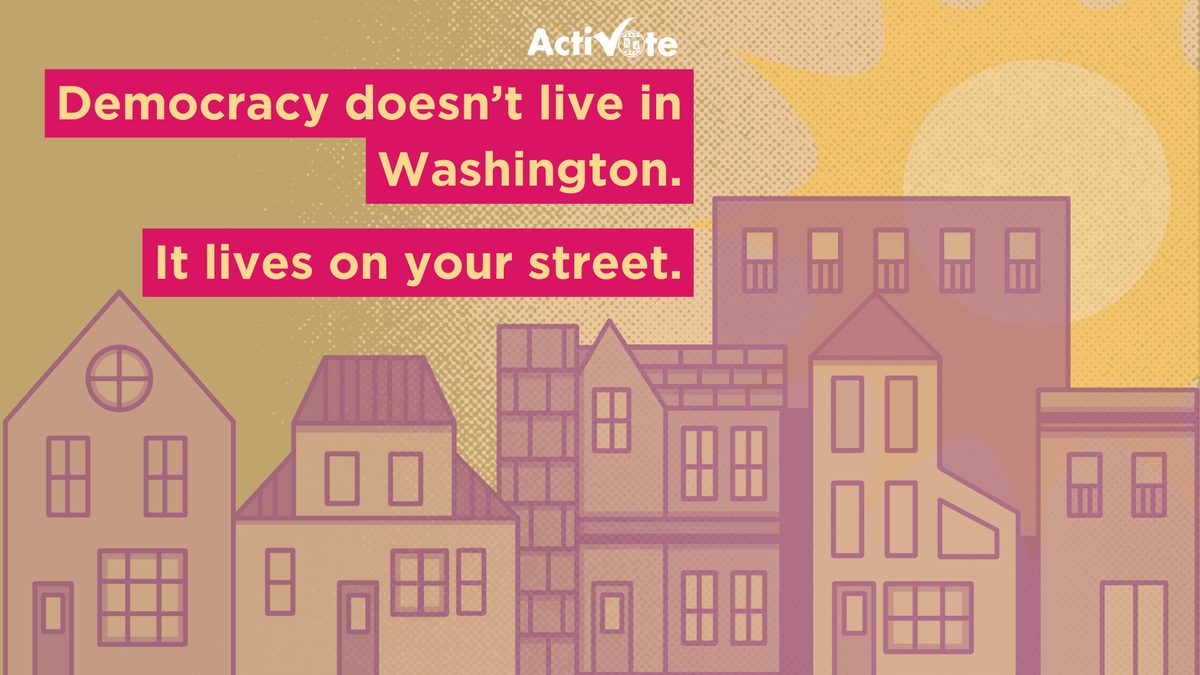
Because the truth is, democracy doesn’t live in Washington, it lives on your street.