67% of Americans Strongly Disapprove of Trump’s $5,000 Dividend
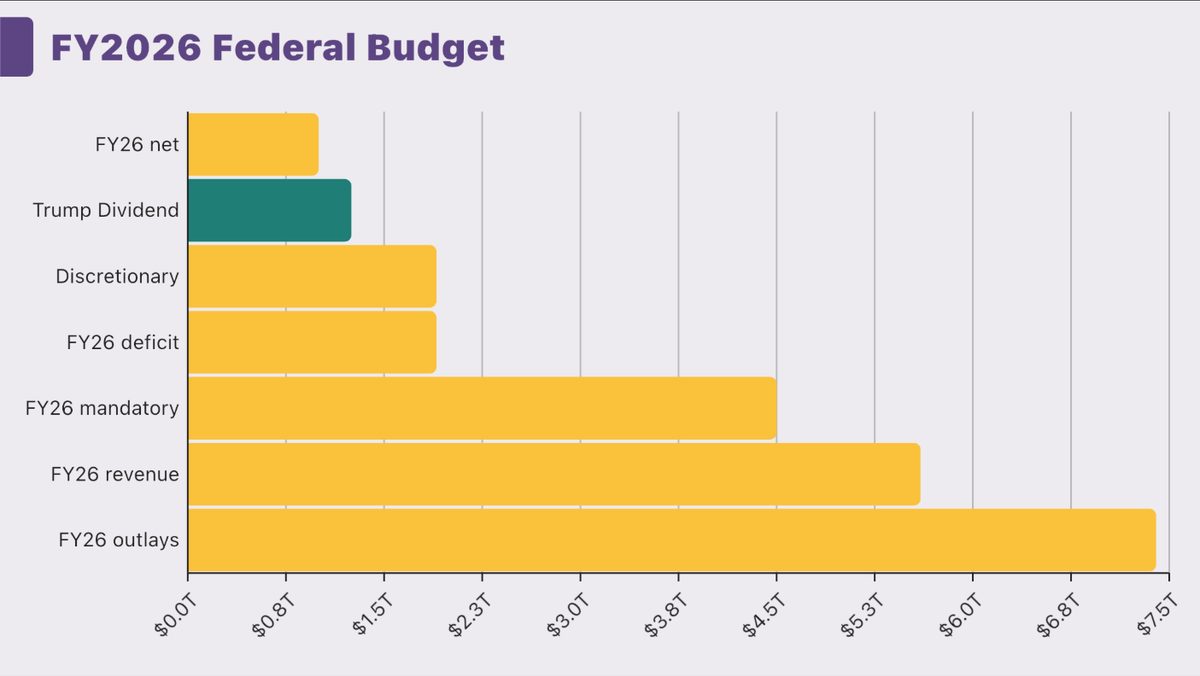
On September 9, 2026, at a Republican midterm convention in Dallas, President Donald Trump announced the “Trump Dividend”: a payment of $5,000 to every adult U.S. citizen if Republicans retain their majorities in both the House and the Senate after November. He said the money would have to be spent within the United States. A single round of payments to roughly 250 million adult citizens would cost about $1.25 trillion. The proposal did not specify a funding source, a delivery method, a verification process or final eligibility rules, and Congress has neither enacted legislation nor appropriated funds for it.
Large federal cash payments require both legal authority and money. The Constitution’s Appropriations Clause permits funds to be drawn from the Treasury only through appropriations made by law, which puts federal spending in the hands of Congress; the stimulus payments made during the COVID-19 pandemic were authorized by laws Congress passed and the president signed. Separately, federal law prohibits offering money or anything of value in exchange for voting, registering to vote, or not voting. In 1982 a Louisiana school board candidate, E. B. Malmay, was convicted of conspiring to pay voters to support particular candidates, but the identified precedents concern payments tied to specific candidates rather than a universal payment conditioned on which party controls Congress.
We wondered what Americans make of the offer. So we asked 1,049 registered voters (MoE of 3.0%) from September 14 to September 20, 2026 about it:
Which of the following statements best reflects your opinion on Trump’s $5,000 dividend proposal?
- Strongly approve
- Approve
- Neutral
- Disapprove
- Strongly disapprove
What voters said
Americans reject the proposal by close to four to one. 73% disapprove and 19% approve, with 6% neutral and 2% choosing none of the above.
Across the political spectrum
Support rises steadily from left to right, but never pulls ahead. Strong disapproval falls from 92% on the Left and 89% on the Moderate Left to 67% in the Center and 40% on the Right, but every group still turns the proposal down — the Right by 49% to 38%, the Moderate Right by 55% to 33%.
Where the Right stands apart is in outright enthusiasm. Nearly a third of them, 31%, strongly approve, more than anywhere else in the poll and against 1% on the Left.
Zooming out
Party divides the answers more than anything else, and Republicans are the only group to come out in favor. They approve by 48% to 37%, while 87% of Democrats and 82% of independents disapprove strongly. That Republicans land on the opposite side from the Right is worth noting: the two groups are measured differently, one by party registration and the other by positions on policy, and on this question they part company.
Income makes no difference. $5,000 would go further in a household that has less, but the answers do not show it: approval is 20% among low-income voters, 17% in the middle and 19% among the highest earners, while roughly two thirds strongly disapprove in all three groups.
Age divides people more, and it is the young who are hardest on the idea: 78% of voters aged 18 to 29 strongly disapprove, against 57% of those 65 and older, who are also the most likely to strongly approve at 20%.
The dividend is a campaign promise before it is a policy: offered to voters, and payable only if they vote a particular way. Asked directly, they turned it down. If Trump is looking for something to carry the midterms, this does not look like it.
See more of what America thinks in our ongoing polls.