60% of Americans Say Voluntary Intoxication Should Not Block Sexual Assault Cases
On September 16, 2026, a woman identified as “Jane Doe” filed a civil lawsuit against Cornell University, the Chi Phi fraternity, seven former and current students and several other defendants. She states that on October 19, 2024, she was pressured at the fraternity house to take ketamine, marijuana and liquor by two members who then sexually assaulted her. She reported it to the Cornell University Police in November 2024, and the Tompkins County District Attorney’s Office declined to pursue criminal charges.
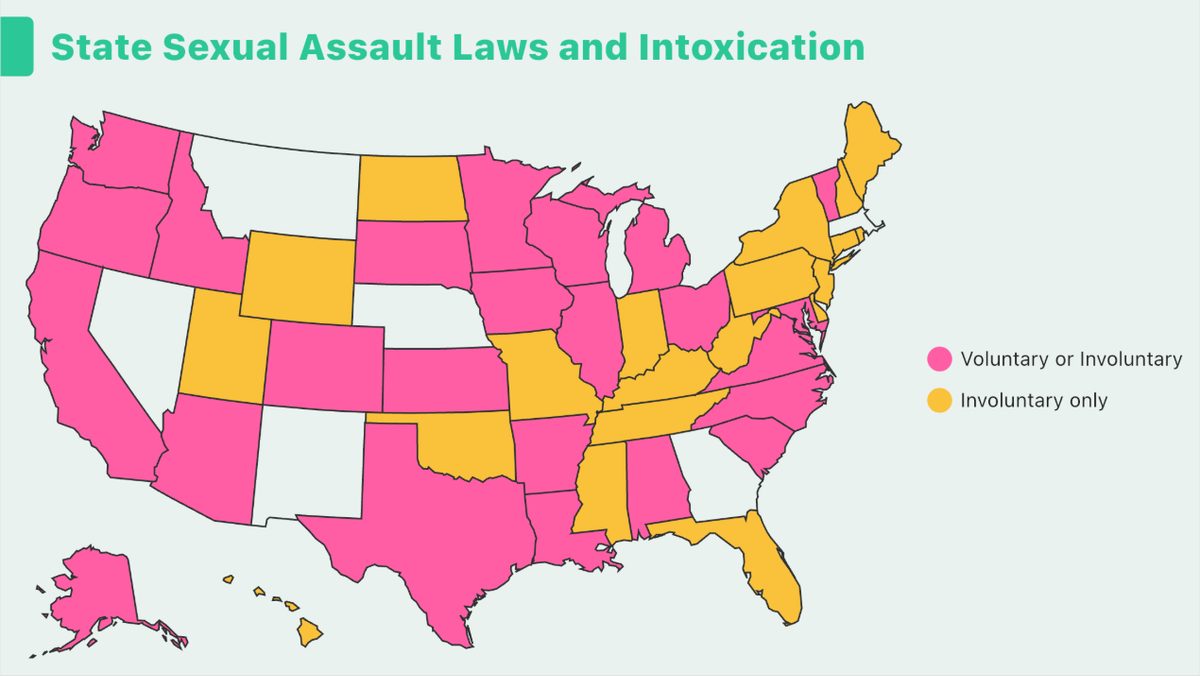
Under New York law, rape must involve force or a clear refusal, except where the victim is unconscious or mentally incapacitated after being drugged without their consent. Because of this, prosecutors often struggle to bring charges when a victim is assaulted after voluntarily drinking or taking drugs. In January 2025, Assemblyman Jeffrey Dinowitz sponsored A.101, which would bar defendants from using a victim’s intoxication as a defense when they knew, or reasonably should have known, that the victim was too intoxicated to consent, even if the victim chose to drink or take drugs. New York is one of 19 states whose laws limit such cases to involuntary intoxication. This question is a collaboration with our partners at ACE.
We wondered what Americans think of these laws. So we asked 997 registered voters (MoE of 3.1%) from October 18 to October 26, 2026 about it:
Which of these statements best reflects your opinion on involuntary intoxication laws in sexual assault cases?
- The current law is a dangerous loophole and denies justice for victims.
- Voluntary intoxication should not be a de facto defense or barrier to prosecution.
- The current law should be adjusted to ensure both the presumption of innocence and nuance in these situations.
- The current distinction between voluntary and involuntary intoxication is reasonable.
- Personal responsibility is paramount and the law must protect all people including the accused.
What voters said
Most Americans want the law changed. 60% take one of the two answers that reject the current rule: 48% call it a dangerous loophole that denies justice for victims, the largest single answer, and 12% say voluntary intoxication should not be a defense or a barrier to prosecution.
Another 16% want the law adjusted to protect both the presumption of innocence and nuance. On the other side, 21% would keep things as they are: 3% find the current distinction reasonable and 18% say personal responsibility comes first and the law must protect the accused. 2% chose none of the above.
Across the political spectrum
The spectrum explains most of the split. On the Left, 83% call the current law a dangerous loophole and 1% put personal responsibility first. The balance moves steadily to the right, and on the Right it reverses: personal responsibility leads with 44%, against 18% for the loophole answer.
The Center leans toward change but is the most divided group: 41% choose the loophole answer and 17% voluntary intoxication, while 24% want the law adjusted for both sides, more than anywhere else on the spectrum.
Zooming out
Gender splits this question almost as sharply as politics does. Among women, 59% call the current law a dangerous loophole, against 36% of men. Men are twice as likely to want the law adjusted for both sides, 22% to 11%, and more likely to put personal responsibility first, 22% to 14%.
Party affiliation follows the spectrum: 71% of registered Democrats choose the loophole answer, while registered Republicans lean the other way, with 38% putting personal responsibility first and 26% choosing the loophole answer. Black voters are among the strongest supporters of change, with 71% choosing the loophole answer. Rural voters are the most likely to put personal responsibility first, at 27%.
A.101 would do what the two leading answers ask: stop a victim’s voluntary intoxication from shielding a defendant who knew, or should have known, that the victim could not consent. Together those answers draw 60% of registered voters, and only 3% call New York’s current distinction reasonable.
See more of what America thinks in our ongoing polls.